Australia October CPI preview: Core inflation data to dictate RBA rate cut timeline
Australia's October consumer price index is expected to show headline inflation peaking at 4.8%, with the core trimmed mean reading determining when the Reserve Bank of Australia begins easing monetary policy.
- Consensus forecasts expect headline CPI to rise 0.4% month-on-month, lifting the annual rate to 4.8% from September's 4.3%.
- The Reserve Bank of Australia's cash rate stands at 4.85% following a November hike, with markets pricing a December hold as near certain.
- Unemployment rose to 4.9% in October, the highest level since 2021, as the economy shed jobs for the second consecutive month.
- Higher automotive fuel prices and the unwinding of electricity subsidies are the primary drivers of the headline inflation increase.
Australia’s consumer price index data for October is set to reveal whether inflation has reached the top of its current cycle, with the core reading poised to influence the Reserve Bank of Australia’s monetary policy trajectory.
A core print of 0.4% or higher would likely push back expectations for easing, supporting the currency and lifting front-end yields. Conversely, a 0.3% print would reinforce the timeline for rate cuts among major financial institutions.
Inflation Drivers and Forecasts
Forecasters are split on the precise trajectory of the core measure, known as the trimmed mean, which the central bank prefers as a gauge of underlying inflation. Most calls project a monthly gain of 0.3%, keeping the annual rate steady at 3.6%.
The big four banks are divided in their assessments. Commonwealth Bank and NAB both anticipate headline inflation at 4.7% with the trimmed mean holding at 3.6%. In contrast, Westpac and ANZ are positioned at 4.8% for the headline and 3.7% for the core. Westpac has described October as the likely peak in Australian inflation, expecting the trimmed mean to slip below 3% by the third quarter of 2027.
Fuel costs and policy changes are the main contributors to the headline rise. NAB estimates that higher automotive fuel prices will add approximately 1.2 points to year-end inflation. Additionally, the unwinding of government electricity subsidies is adding to the upward pressure. Neither of these factors represents domestic demand pressure, which is the specific type of economic activity that monetary policy is designed to address.
Labor Market Shifts
Unemployment rose to 4.9% in October, marking the highest level since 2021. This follows a similar upside surprise in September, with the economy shedding jobs in both months.
Three board members preferred to hold rates steady. The subsequent statement no longer flagged further increases.
Markets now price a hold at the 7 to 8 December meeting as near certain. All four major banks expect the central bank to maintain rates at that session. Consequently, the October CPI numbers serve as a guide for when the first cut will occur, with banks currently placing this between June and August 2027.
Policy Uncertainties
On 1 October, a ban on card payment surcharges came into effect.
ANZ estimates that this regulatory change could add about 0.1 point to headline CPI.
Key factors influencing the market reaction include:
- The trimmed mean forecast split between 0.3% and 0.4% monthly growth
- The Reserve Bank's current cash rate of 4.85% after the November hike
- Unemployment rising to 4.9%, the highest level since 2021
- The potential 0.1 point impact from the card surcharge ban
Market Implications
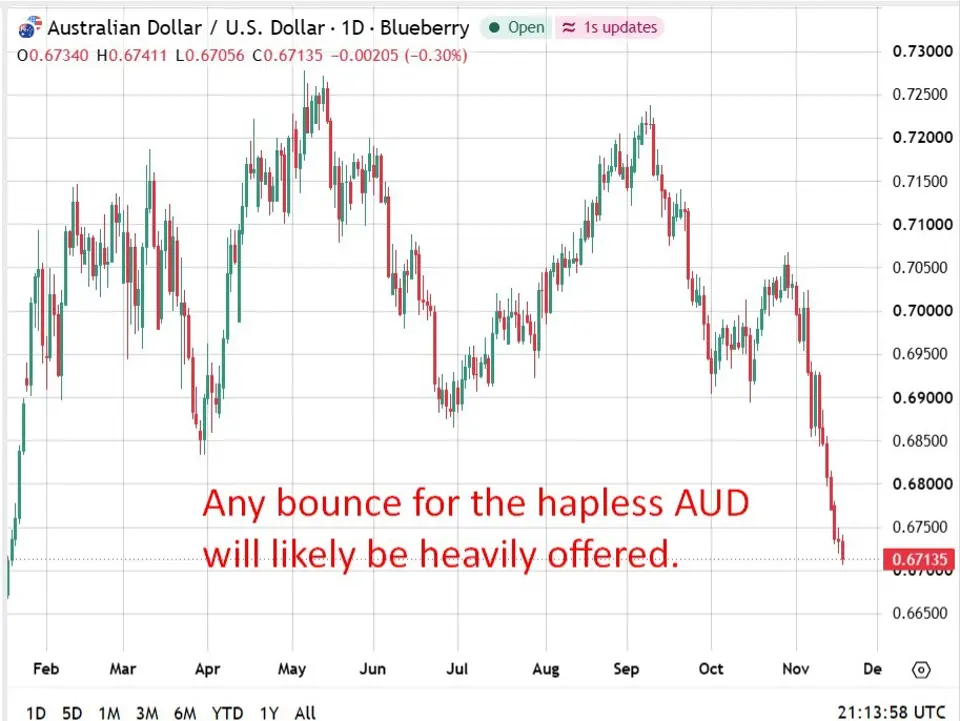
The Australian dollar is currently trading around 66.4 US cents. Any move in the currency may meet thinner liquidity than usual as US markets head into a Thanksgiving-shortened week. For energy watchers, the fuel-led headline rise serves as another indicator that crude prices are feeding into inflation and central bank decisions well beyond the United States.
A 0.3% core print would support the view that inflation has peaked, keeping the mid-2027 easing timeline in sight. A 0.4% or firmer reading would suggest that underlying price pressure is fading too slowly for the board to ease soon, even as job losses mount.
Something wrong in this story, or about you in it?Request a correction or removal