Image: © investingLive
Australia jobs report looms as RBA board splits on rate path
Australia’s October employment data is due Thursday, with markets watching for signs of a rebound after September’s drop to influence the Reserve Bank of Australia’s next move.
- Consensus forecasts predict a gain of 25,000 jobs and an unemployment rate steady at 4.7%.
- The RBA board was split 6-3 on the November rate hike, with dissenters warning of a sharper economic downturn.
- Wages rose 1.1% in the September quarter, the largest gain since late 2023, though real wages continue to fall.
- Markets have largely priced out a December rate increase, with February now seen as the next potential hike window.
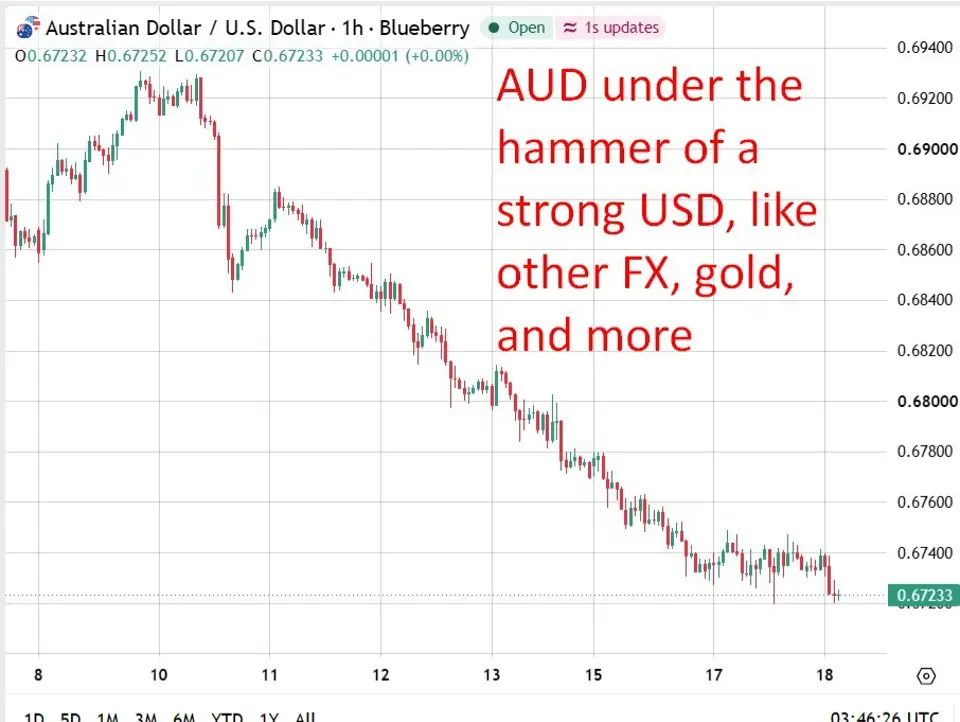
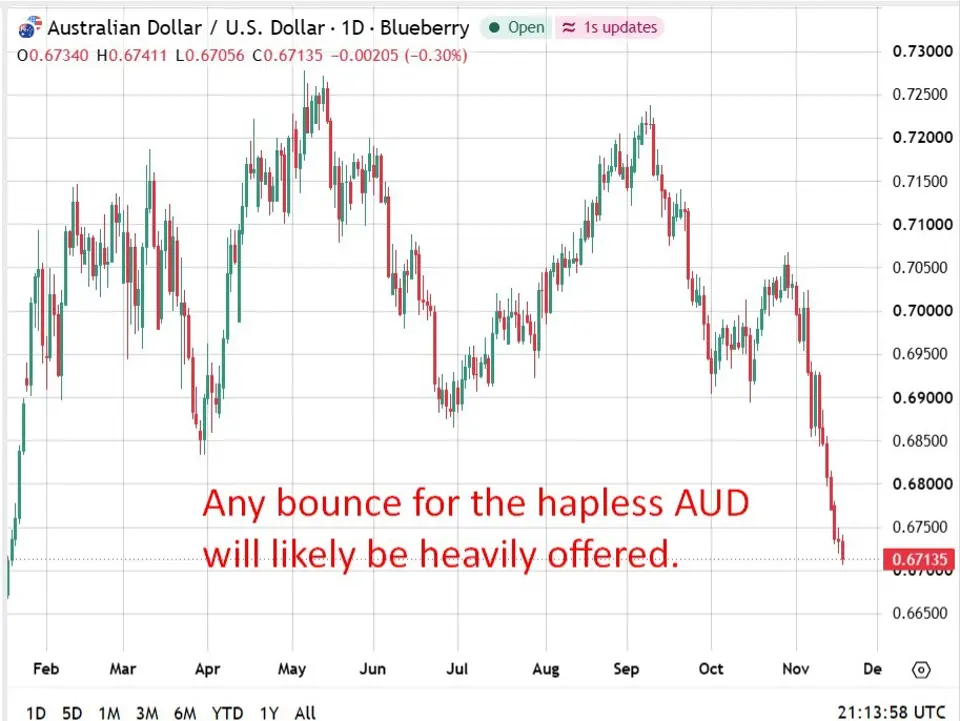
The Australian dollar is trading near 0.6715, a level close to its weakest point since January.
A solid headline gain combined with a steady or lower jobless rate could revive expectations for a rate hike in February, lifting the Australian dollar from its current lows. Conversely, if the unemployment rate rises to 4.8% or higher, it may extend the currency’s slide and push front-end yields lower as traders adjust their expectations for a longer peak in interest rates.
RBA Board Division
Minutes published on Tuesday revealed a six-to-three vote in favor of raising the cash rate by 25 basis points to 4.85%, marking the fifth increase in 2026 and the highest level since 2008. The majority of the board judged that policy was not yet clearly tight enough to contain upside inflation risks.
The three dissenting members warned that the economy might be approaching a materially sharper downturn. They cited the delayed effects of previous rate hikes, a larger-than-expected rise in unemployment, and a softening housing market as key concerns.
Wage Growth and Real Wages
While nominal wages are rising. Wages increased by 1.1% in the September quarter, representing the largest quarterly gain since late 2023. This boost lifted annual wage growth to 3.5%. However, with inflation remaining above 4%, real wages have now declined for four consecutive quarters.
The RBA minutes noted that oil costs linked to the Middle East conflict could further contribute to inflation. This suggests that a soft employment print alone may not eliminate the possibility of further tightening, provided crude prices remain elevated.
Market Expectations and Forecasts
Commonwealth Bank of Australia expects a reversal of the part-time job slump. CBA’s internal labor data point to October growth of approximately 18,000, which they describe as slightly below the pace needed to prevent the unemployment rate from rising.
Westpac also expects jobs growth to run below population growth. The RBA’s own forecasts assume unemployment will climb to 4.9% by the end of the year and slightly above 5% by late 2028. A modest uptick would not be a shock.
Key elements of the upcoming report include:
- A consensus expectation of 25,000 jobs added in October
- An anticipated unemployment rate of 4.7%
- A participation rate forecast at 66.8%
Several high-profile layoff announcements, including cuts at NAB, Qantas, Rio Tinto, and David Jones, add to the sense of downside risk. However, economists note that these numbers remain small relative to average monthly hiring.
Future Rate Hike Window
Traders have largely abandoned bets on a December rate move. CBA has flagged that the 7 to 8 December meeting is unlikely to be live for a decision, identifying February as the next realistic window for another hike. A clean rebound in jobs alongside firm wages could keep that February option open.