Australia unemployment rate forecast at 4.7% as RBA holds steady
The Australian Bureau of Statistics will release October employment data while the Reserve Bank of Australia maintains its cautious stance following five rate hikes this year.
- The Australian Bureau of Statistics is set to publish the October employment report on Thursday at 00:30 GMT.
- Market participants expect the unemployment rate to remain unchanged at 4.7%, matching the revised August figure.
- The Reserve Bank of Australia recently increased the Official Cash Rate to 4.85%, marking the fifth hike in 2026.
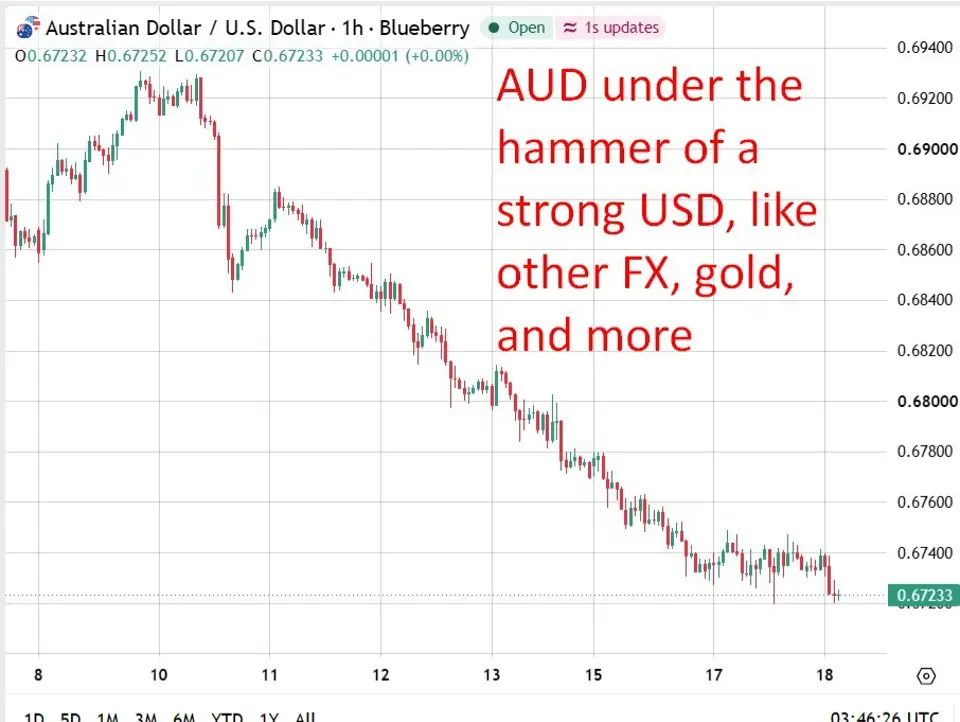
- The Australian Dollar trades slightly above the 0.6700 level against the US Dollar ahead of the announcement.
Market participants anticipate that the unemployment rate will remain unchanged at 4.7 percent, a figure that matches the revised reading from August.
Labor Market Details
The report will provide a detailed breakdown of employment changes, distinguishing between full-time and part-time positions. Generally, full-time jobs entail working thirty-eight hours or more per week and typically include additional benefits and consistent income. In contrast, part-time employment generally offers higher hourly rates but lacks consistency and benefits. The Australian economy historically prefers full-time positions.
The economy lost seventy-three point seven thousand part-time positions while adding thirty-four point four thousand full-time ones. For the upcoming October report, market participants expect the creation of twenty-five thousand new job positions, following the loss of thirty-nine point three thousand jobs recorded in August. The breakdown between full-time and part-time roles will be watched closely, as a discouraging reading is unlikely to boost the odds for a rate hike in December but may keep the door open for additional increases in 2027.
Central Bank Stance
Six members voted for the increase due to concerns over persistently high inflation, while three preferred to wait for the full impact of previous rate hikes to filter through the economy.
Board members cited strong market services inflation, high unit labor costs, broad cost pressures, and a likely rise in the neutral rate as key factors. The staff’s judgment was that this largely reflected stronger-than-expected labor supply.
The RBA has revised its outlook for the unemployment rate, now expecting it to reach 5.1 percent in 2028, which is around a quarter of a percentage point higher than previously expected. Market participants anticipate that the RBA will remain patient at its next meeting in December, given the five hikes already delivered this year.
Currency and Global Context
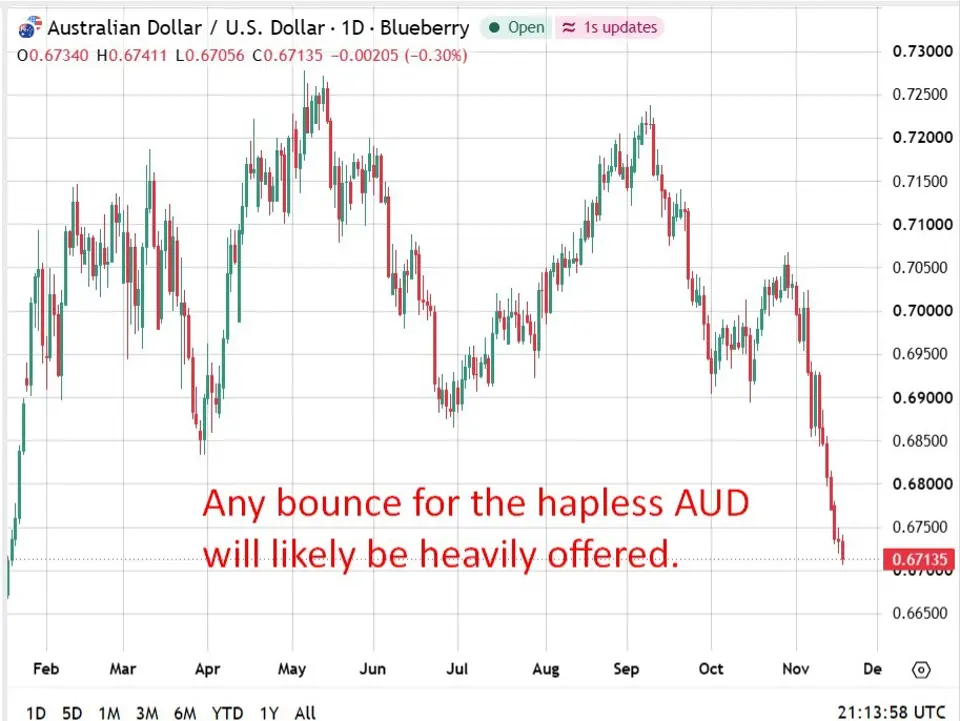
The Australian Dollar is trading a handful of pips above the 0.6700 level against the US Dollar ahead of the announcement. This level is not far above the yearly low posted in January at 0.6663.
Valeria Bednarik, Chief Analyst at FXStreet, noted that the AUD/USD pair trades at levels last seen in January. She stated that despite looking oversold, there are no signs it has already found an interim bottom. A decline beyond the yearly low in the 0.6660 region is on the cards, particularly if the 0.6700 level gives up, with the pair likely to test the 0.6600 psychological threshold in the upcoming sessions.
A twenty-five basis point hike is already priced in, although policymakers’ hawkishness has opened the door for potentially more aggressive hikes. If the Australian unemployment rate deteriorates while job creation results fall below expectations, it would back the case for no RBA action in December, putting the AUD/USD pair under additional selling pressure. Conversely, a lower-than-anticipated unemployment rate coupled with strong job creation could trigger a near-term rally, though this is likely to attract sellers given the existing rate hike trajectory.
The RBA board's recent decision-making process involved the following key details:
- The vote was split with six members voting for the increase due to concerns over persistently high inflation.
- Three board members preferred to wait for the full impact of previous rate hikes to filter through the economy.
- The decision marked the fifth hike in 2026, keeping the Official Cash Rate at 4.85 percent.