Image: © investingLive
Australia private sector shrinks at fastest pace in five years on weak demand
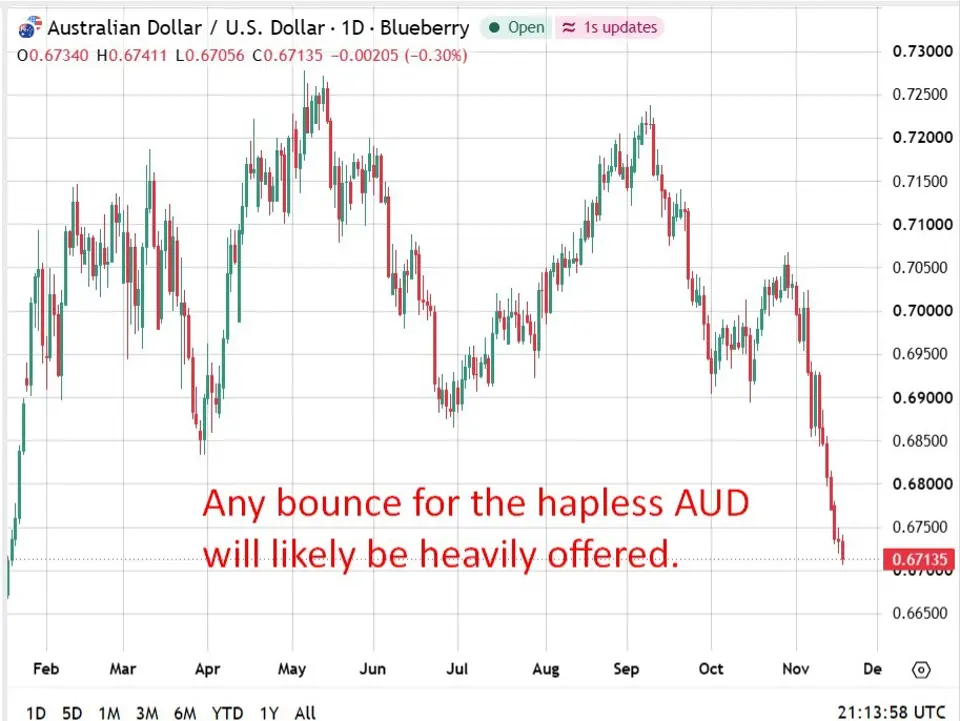
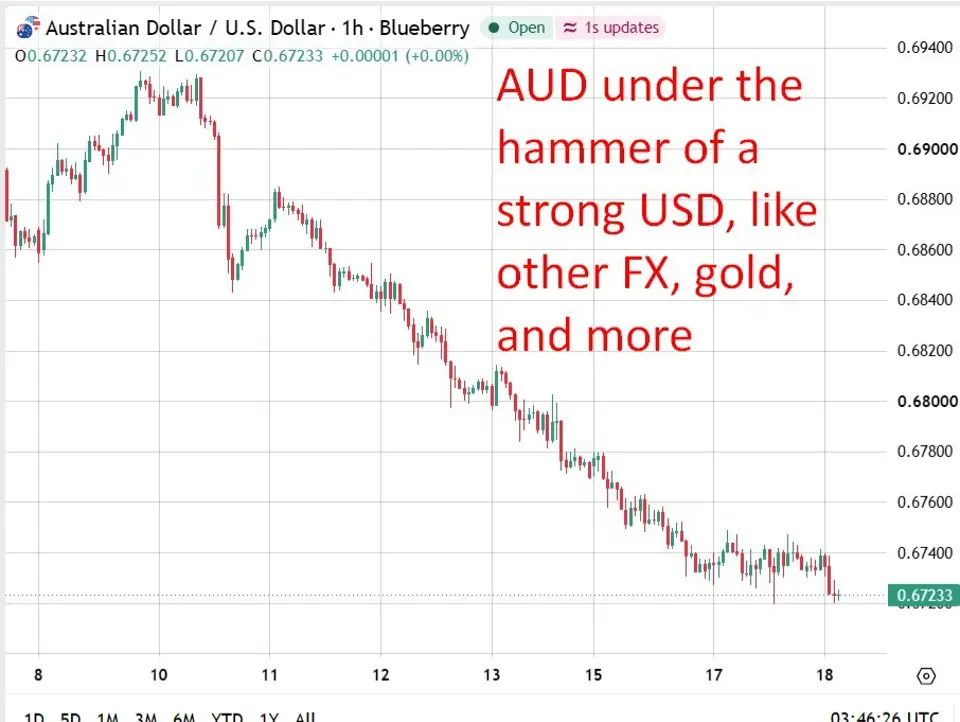
Australia's composite PMI dropped to 46.1 in November, marking the sharpest private sector contraction since August 2021 as high interest rates and softening global demand weighed on both services and manufacturing.
- The flash composite PMI fell to 46.1 from 48.2, extending the contraction to a second month.
- Business confidence hit a three-year low as firms cut staff and reduced backlogs amid subdued economic conditions.
- Composite PMI fell to 46.1, the lowest level since August 2021.
The flash composite output index dropped to 46.1 from 48.2 in the previous month, marking the second consecutive period where activity fell below the 50 threshold that distinguishes expansion from contraction. This reading represents the lowest level recorded since August 2021.
The downturn was widespread across major economic segments. Simultaneously, manufacturing output weakened further, with the PMI slipping to 48.7 from 49.6.
Demand Weakness Drives Job Cuts
Total new orders fell for the first time in five months, dropping at the fastest pace since August 2021. The decline in services new business outpaced the contraction in manufacturing orders, highlighting the breadth of the slowdown.
Export orders also suffered, falling at the sharpest rate in just over two years. Uncertainty in overseas markets weighed heavily on foreign demand. As incoming work slowed, companies began to address existing backlogs, marking the first reduction in backlogs since June.
For the second time in three months, firms reduced their staff numbers, with manufacturers shedding jobs at a faster rate than service providers. Business confidence plummeted to a three-year low.
Inflation Pressures Easing
Despite the contraction in activity, price pressures showed signs of moderation. Input cost inflation eased for the first time in four months. However, this easing occurred alongside continued increases in fuel, transport, supplier, and wage costs. Additionally, manufacturers reported a marked lengthening of delivery times.
Selling price inflation also slowed, with firms raising prices more gradually than in October. Jingyi Pan, an economics associate director at S&P Global Market Intelligence, noted that these developments suggest recent tightening in financial conditions is having the intended effect on price pressures. Nevertheless, she cautioned that inflation has not yet been fully contained, and the combination of falling employment and low confidence points to weaker output in the coming months.
Data Release Schedule
The final November reading for manufacturing is scheduled for release on December 1. The final data for the services sector and the composite index will follow on December 3.
Key metrics from the flash survey include:
- Composite PMI fell to 46.1, the lowest level since August 2021.
- Services PMI dropped to 46.2, while manufacturing PMI eased to 48.7.
- Business confidence reached a three-year low as firms cut staff and reduce backlogs.
- Input cost inflation eased for the first time in four months, though prices remain above long-term averages.