Image: © FXStreet
Japanese Yen rises on inflation data as BoJ December hike odds climb
Japan's October CPI data reinforced expectations for a Bank of Japan rate hike, strengthening the yen against the dollar despite US yield pressures and intervention risks.
- Japan's National Consumer Price Index inflation rose to 2.3% year-on-year in October, exceeding the Bank of Japan's 2% target.
- Market data indicates a 72% probability of a 25 basis point rate hike by the BoJ in December.
- BoJ Governor Kazuo Ueda stated that underlying inflation aligns with the price target and affirmed plans to continue raising interest rates.
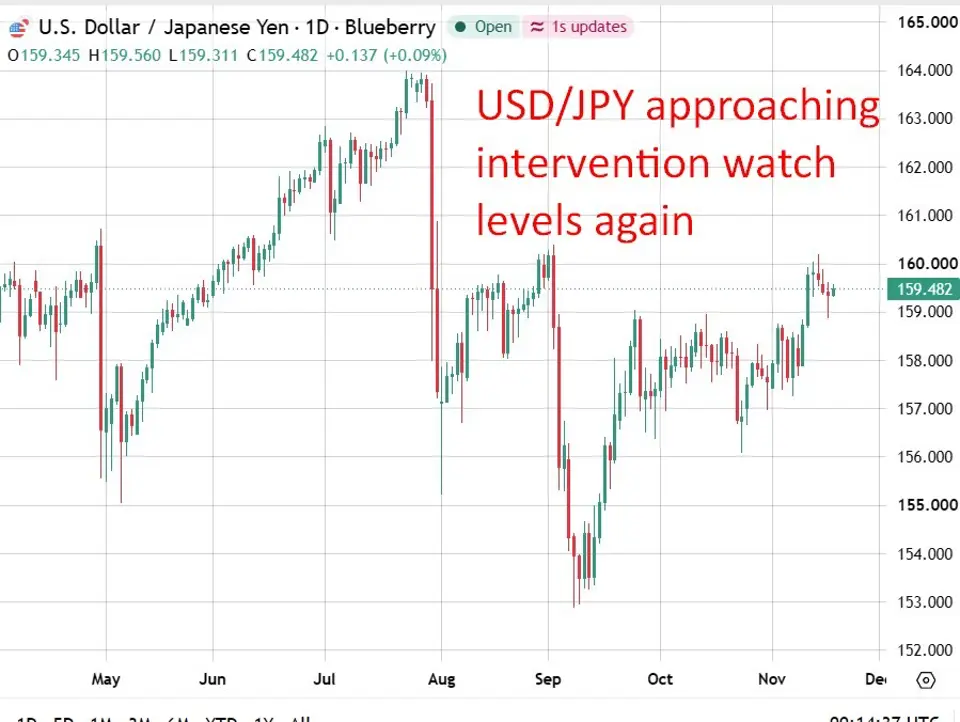
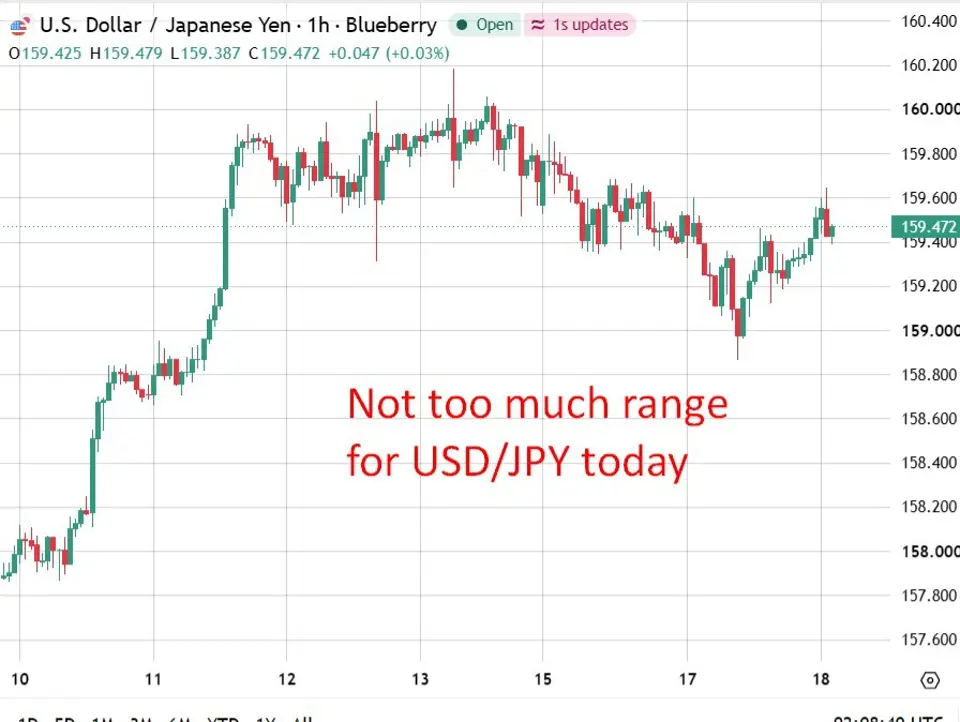
- USD/JPY traded around 159.20, facing resistance near 160.00 amid concerns over potential Japanese currency intervention.
The Japanese yen gained ground against the US dollar on Friday, driven by fresh inflation data that strengthened the case for further monetary tightening by the Bank of Japan. The USD/JPY pair lost traction, dropping to approximately 159.20 during early European trading.
Data released by the Japan Statistics Bureau revealed that the National Consumer Price Index climbed to 2.3% year-on-year in October, up from 2.1% in September. This figure marked the second consecutive month that headline inflation exceeded the central bank's 2% target. Core inflation, which excludes volatile food prices, also rose to 2.2% year-on-year, while the gauge stripping out both fresh food and fuel decelerated to 2.2% from 2.4%.
Despite the strong inflation print, the core measure fell slightly short of the 2.3% market consensus. However, the overall trend has bolstered expectations that the BoJ will implement another rate hike in December. According to data from LSEG, traders are pricing in a 72% likelihood of a 25 basis point increase.
Policy Signals and Governor Comments
Bank of Japan Governor Kazuo Ueda provided further clarity on the central bank's trajectory, stating that underlying inflation roughly aligns with the 2% price target. He emphasized that monetary conditions remain accommodative and confirmed the bank's intention to continue raising interest rates.
The governor also reiterated that financial conditions remain loose and warned that yen weakness could exacerbate inflation pressures.
Market Dynamics and Technical Levels
Strategists at Brown Brothers Harriman noted that the USD/JPY pair is testing key resistance at 160.00, supported by higher US yields. However, they cautioned that the risk of Japanese intervention makes chasing gains beyond this level less attractive.
Technical indicators suggest a mild bullish bias for the dollar-yen pair. The USD/JPY holds above the 100-day simple moving average at 158.85 and the Bollinger middle band, indicating underlying demand on shallow pullbacks. The Relative Strength Index stands at 55, suggesting constructive but not stretched upside momentum.
Key technical levels to watch include:
- Immediate resistance is aligned with the upper Bollinger band near 160.30, where buyers may face profit-taking.
- The 61.8% Fibonacci retracement sits at 159.74, followed by the 78.6% level at 161.58.
- Initial support is found at the 100-day SMA at 158.85, with the Bollinger mid-line at 158.65 as the next floor.
- A deeper retracement would target the lower Bollinger band around 157.00 or the 38.2% Fibonacci retracement at 157.14.
Broader Economic Context
Meanwhile, the US dollar remains firm near its highest level since April 2025. Looming intervention risks from Japanese authorities continue to cap upside potential for the dollar.
Market participants are now looking ahead to the revised University of Michigan US Consumer Sentiment and Inflation Expectations data. Further speeches from Federal Reserve members and developments in the Middle East will also influence dollar demand and the trajectory of the USD/JPY pair in the coming sessions.