Image: © FXStreet
Australian Dollar hits YTD low as labor data disappoints
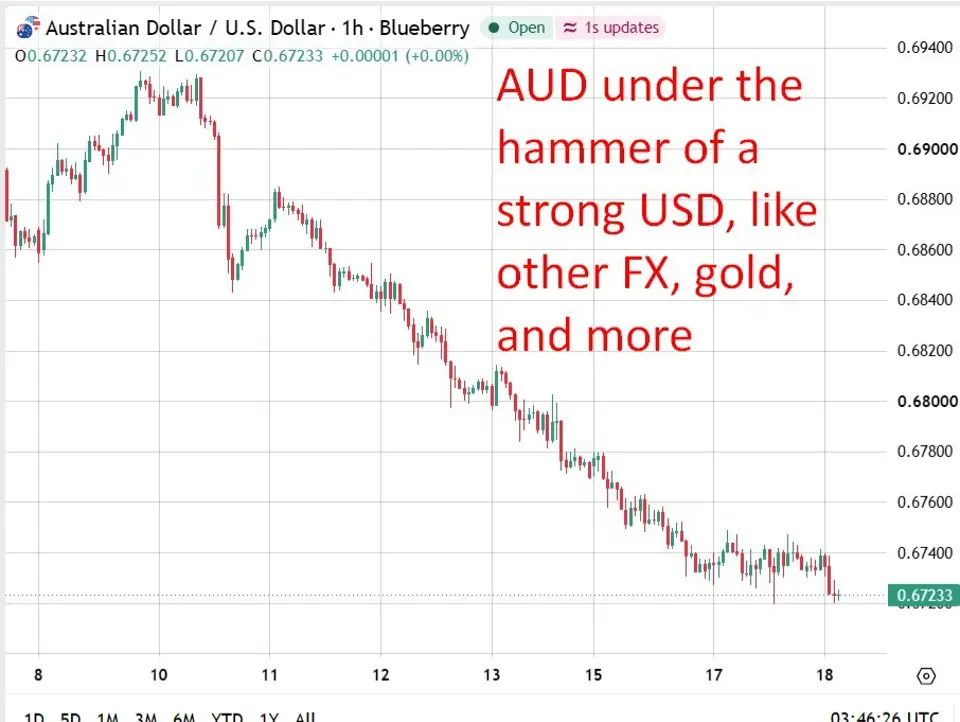
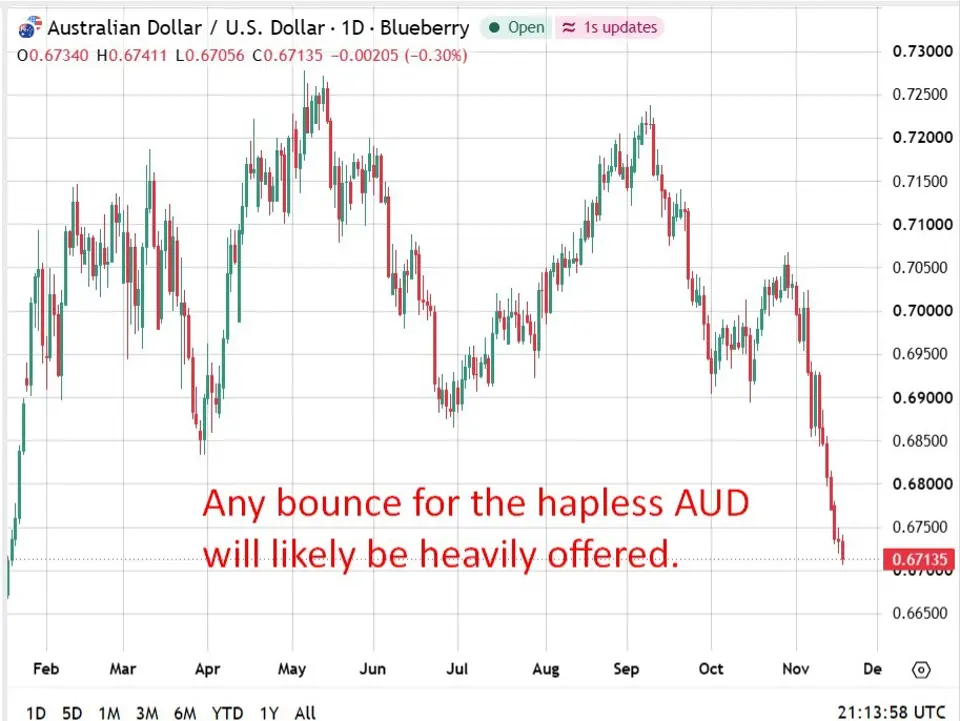
The Australian Dollar fell to a fresh year-to-date low against the US Dollar, driven by weak employment figures and shifting interest rate expectations from the Reserve Bank of Australia.
- The Australian Dollar reached a year-to-date low near 0.6646 against the US Dollar.
- October employment data showed a sharp fall of 43,500 jobs, missing the expected increase of 25,000.
- The unemployment rate rose to 4.9%, the highest level since late 2021.
- Commerzbank analysts suggest the Reserve Bank of Australia's rate-hiking cycle has likely ended.
- Markets are currently pricing in approximately 1.5 interest rate cuts by the end of 2027.
Trading in European sessions, the pair recovered slightly to around 0.6670, up 0.18%, after touching a low near 0.6646 on Friday.
This depreciation follows a substantial deterioration in market expectations regarding the Reserve Bank of Australia's monetary policy. The central bank has implemented five quarter-to-a-percent interest rate hikes this year, raising the Official Cash Rate to 4.85%.
Labor Market Weakness
The unemployment rate climbed to 4.9%, marking the highest level seen since late 2021.
Analysts at Commerzbank emphasized the severity of the labor data, noting that employment fell sharply by 43,500. The bank argues that these figures indicate the Reserve Bank of Australia's rate-hiking cycle has likely concluded with its most recent meeting.
Shifting Rate Expectations
While the labor data suggests the tightening phase is over, analysts caution against premature bets on future rate cuts. Commerzbank noted that markets are currently pricing in approximately 1.5 interest rate cuts by the end of 2027, a view the bank considers premature based solely on the latest employment figures. They stressed that incoming data must confirm the continuation of this cooling trend before such expectations are justified.
The next labor market data and inflation figures will be critical in shaping market sentiment.
Key data points influencing the outlook include:
- October employment figures showed a fall of 43,500 jobs against an expected increase of 25,000.
- The unemployment rate rose to 4.9%, the highest level recorded since late 2021.
- The Reserve Bank of Official Cash Rate stands at 4.85% after five hikes this year.
- Markets are currently pricing in approximately 1.5 rate cuts by the end of 2027.
US Dollar Strength and Technical Outlook
The Australian Dollar's weakness is compounded by the strength of the US Dollar, which has rallied on hawkish expectations from the Federal Reserve. The US Dollar Index, which measures the Greenback against six major currencies, is holding near 104.00.
Technically, the AUD/USD pair trades at 0.6665 with a bearish near-term bias. The pair remains below the 23.6% Fibonacci retracement at 0.6956 and the 38.2% retracement at 0.6756. The nine-week exponential moving average at 0.6896 sits well above the spot price, reinforcing the short-term downward trend. The weekly Relative Strength Index has retreated toward the low-30s, approaching oversold territory, which hints that downside momentum could moderate if selling persists without fresh lows.
Support levels are identified at the 50% retracement around 0.6594, with a deeper Fibonacci floor at 0.6431. On the upside, bulls would need to overcome the 38.2% retracement at 0.6756 to ease immediate downside risks. A break above this level would expose the 23.6% retracement at 0.6956, where a descending cluster of exponential moving averages is expected to offer additional resistance. If inflation data surprises to the upside, the Australian Dollar could benefit as markets scale back rate-cut expectations, whereas lower-than-expected inflation could lead to further losses.