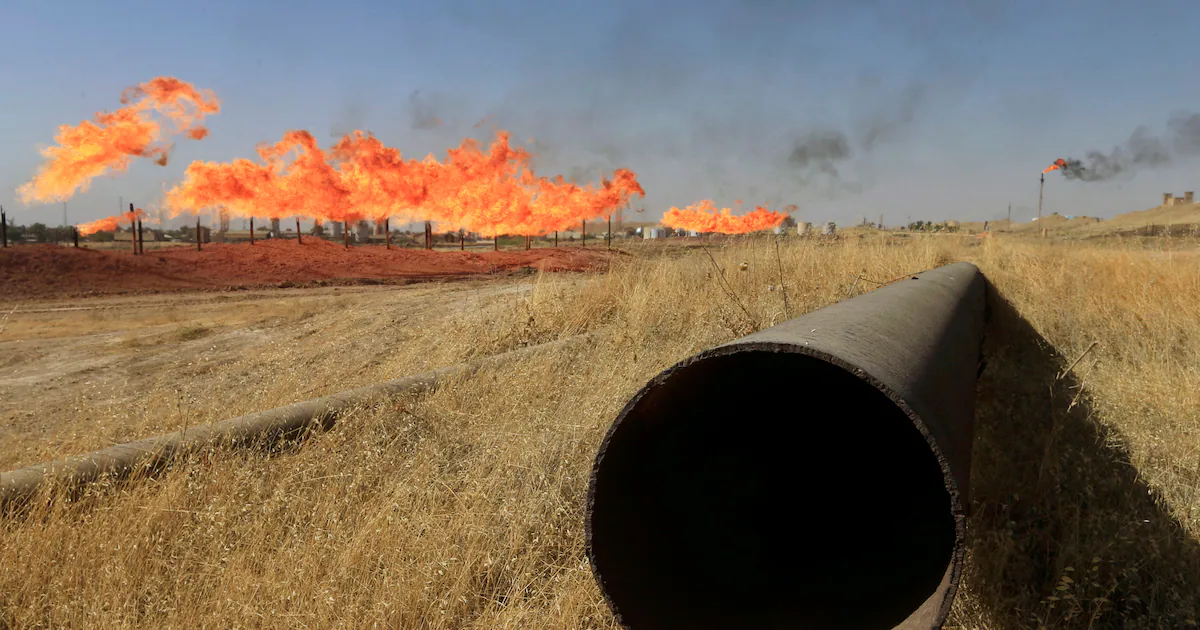
Image: © The National
Iraq Centralizes Oil Control Amid Smuggling Allegations Against Kurdistan
Baghdad has ordered the federal government to manage all oilfields in disputed territories and take over border crossings, following a classified report alleging massive oil smuggling networks operating through the Kurdistan region.
- A classified intelligence report alleges that Iraqi crude from Kirkuk is smuggled into Iran, mixed with Iranian fuel, and sold to Afghanistan, while another route sends oil to Turkey with falsified documents.
- Prime Minister Ali Al Zaidi’s office ordered the Kurdistan Regional Government to stop approving oil exports independently and directed the federal Border Ports Authority to control all regional border crossings.
- The Iraqi government also mandated that the federal Oil Ministry manage all oilfields in disputed provinces including Kirkuk, Diyala, Salahaddin, and Nineveh that are currently under Kurdish security control.
- Kurdish leaders, including former president Masoud Barzani, condemned the directives as unconstitutional and reckless, while the Supreme Judiciary Council supported Baghdad's constitutional authority.
Iraq’s federal government has initiated its most significant administrative overhaul of the Kurdistan region’s oil sector since the 2003 invasion, responding to a classified intelligence assessment that details extensive smuggling operations. The directives strip the regional government of its authority to approve crude exports and transfer control of border crossings and disputed oilfields directly to Baghdad.
Federal Directives and Operational Changes
The Kurdistan Regional Government is now prohibited from granting approval for the export of crude oil or petroleum products except through the federal Oil Ministry.
Simultaneously, the federal Border Ports Authority has been tasked with taking over all border crossings within the Kurdistan region. The Iraqi Oil Ministry has been ordered to assume management of all oilfields located in disputed territories within the provinces of Diyala, Kirkuk, Salahaddin, and Nineveh, specifically those areas currently under Kurdish security control.
Smuggling Routes and Methods
The administrative crackdown is based on a classified report from the Geospatial Intelligence Department of Iraq’s Federal Intelligence and Investigations Agency. The document, which has been verified by a senior security official, outlines two primary smuggling routes that exploit border areas outside central government control.
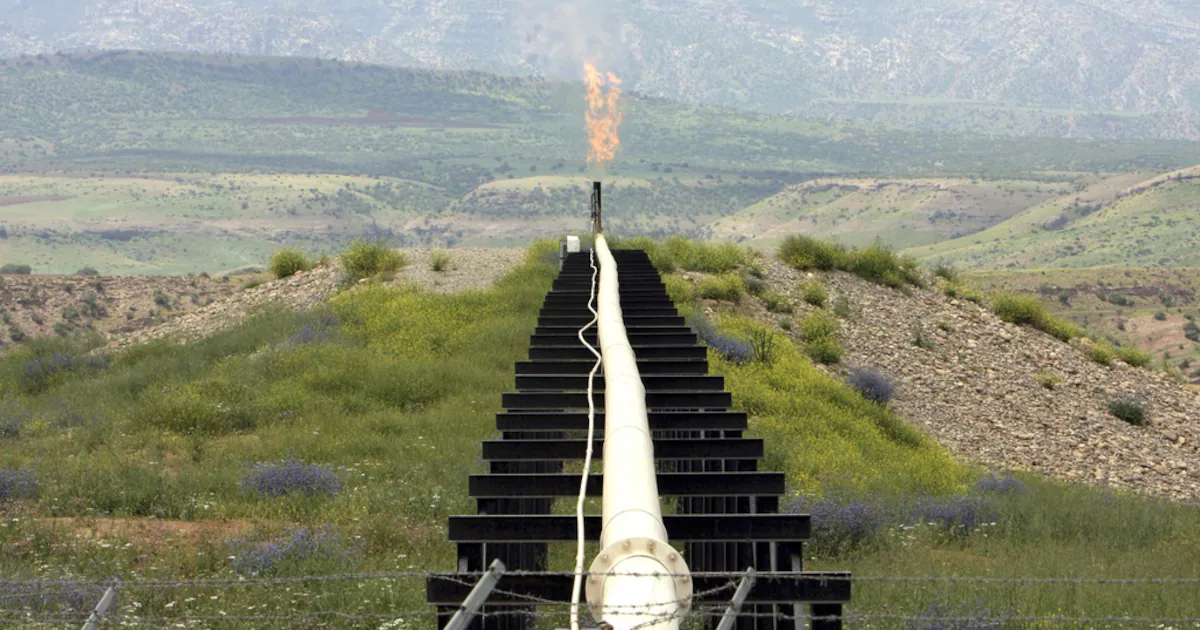
The eastern route originates at North Oil Company fields in Kirkuk, where crude is shipped under official quotas to Sulaymaniyah province. From there, the oil is diverted onto small and medium-sized tanker lorries and moved into Iran through the Bashmakh and Parwezkhan crossings. The report highlights that lower Iraqi prices make the crude attractive for smuggling and re-export.
Satellite imagery spanning from 2024 to 2026 reveals gathering points for tankers near these crossings, along with newly constructed buildings and storage sites at Bashmakh that are linked to petroleum transport. The report identifies blending as a critical step in this process, where smuggled Iraqi oil is mixed with large quantities of Iranian petroleum products. This mixture is then documented as Iraqi product to evade international sanctions on Iran. Iranian tankers subsequently carry the fuel through the Mahirud crossing in Khorasan province or other routes to Afghanistan, where it is sold to fuel stations in areas like Herat and Farah.
The northern route involves crude from the Tawke and Fishkhabour fields, which is sold to local buyers who bypass the federal State Oil Marketing Organisation. These buyers transport the oil in tankers toward the Turkish border, where shipping documents are re-issued or falsified to prepare for export. Satellite images from June 2023 to 2026 show waiting areas at the Ibrahim Khalil crossing in Dohuk province.
Political and Legal Fallout
Masoud Barzani, a former president of the Kurdistan region and leader of the Kurdistan Democratic Party, described the decision as unsound and reckless. He stated that while the region is willing to cooperate in uprooting corruption and preventing smuggling, such efforts must be conducted through legal and constitutional means rather than unilateral decisions.
In response to the criticism, the state-run Iraqi News Agency published constitutional articles and a 2022 Federal Supreme Court ruling that scrap a regional law regulating the industry. The court had previously ordered the region to hand over all oil-sector activities, including exports, to Baghdad. The Iraqi government’s office rejected suggestions that the measures were influenced by foreign powers, asserting that the actions are based solely on constitutional authority and national interests. The Supreme Judiciary Council echoed this sentiment, calling on both Baghdad and Erbil to abide by the constitution, which it described as the guarantor of Iraq’s independent federal system.
Broader Security Context
A leaked document earlier in the week detailed alleged oil theft in Jurf Al Sakhar, an area south of Baghdad controlled by the Iran-backed Kataib Hezbollah militia. The report indicated that hundreds of millions of dollars worth of state oil had been siphoned from the area since it was retaken from ISIS in 2014.
Following these allegations, the government ordered Kataib Hezbollah to withdraw from Jurf Al Sakhar. A joint force comprising the army, federal police, Popular Mobilisation Forces, and energy police has since established a new command headquarters in the town. The constitution, drafted in 2005, remains a source of persistent tension, with grey areas on federalism and resource management continuing to fuel political deadlocks between Baghdad and regional authorities.
Something wrong in this story, or about you in it?Request a correction or removal