Image: © OilPrice.com
Guyana’s Oil Success Sparks Renewed Frontier Exploration by Majors
ExxonMobil’s production milestone in Guyana is encouraging global oil companies to increase spending on high-risk frontier drilling across South America, Africa, and Asia.
- The Stabroek Block partnership between Exxon, Hess Corp., and CNOOC has identified over 11 billion barrels of crude resources.
- Other major oil companies are expanding exploration activities in neighboring Suriname, Brazil, Argentina, and Venezuela.
- ExxonMobil, Hess Corp., and CNOOC have identified over 11 billion barrels of crude resources in the Stabroek Block.
ExxonMobil’s rapid expansion of oil production in Guyana is reigniting interest among major oil companies in high-risk frontier exploration.
Replicating the Guyana Model
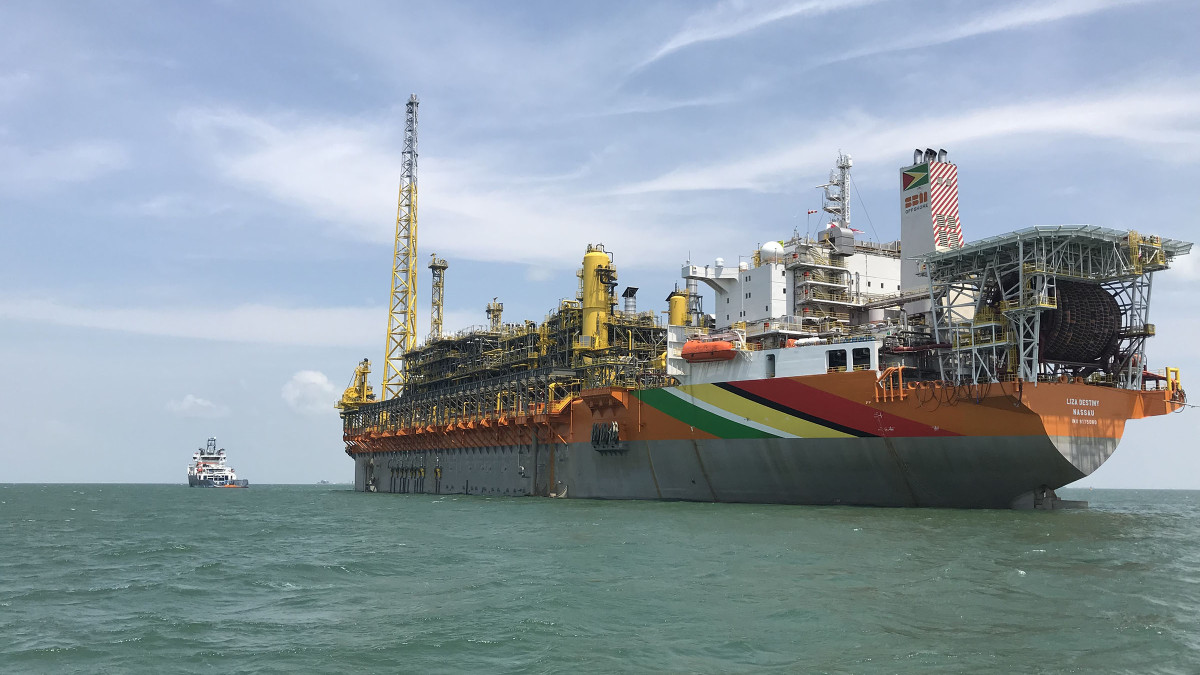
The success in Guyana stems from a long-term strategy initiated by ExxonMobil, in partnership with Hess Corp. and CNOOC. The companies acquired the Stabroek Block offshore Guyana in 1999, beginning active exploration in the late 2000s. Their first oil discovery came in 2015, a period when the Paris Agreement signaled a global shift toward low-carbon energy. Despite industry forecasts predicting peak oil demand, the partners continued to invest billions in development.
The speed of this development has been notable. Production moved from first oil in 2019 to more than 1 million barrels per day in just seven years. Schreiner Parker, an analyst at Rystad Energy, told the Financial Times that this pace is a feat seemingly only achievable by ExxonMobil. The project has become a central pillar of the company’s global upstream growth strategy, demonstrating that significant resource additions are still possible in the oil sector.
Geopolitical Factors and Market Dynamics
The strategic value of Guyana’s oil has been amplified by recent global events. The war between the United States and Israel, along with tensions involving Iran, has caused massive supply disruptions this year. These geopolitical shocks have reinforced the importance of new, stable oil supplies. While the European Union’s imports of oil and gas from the Middle East decreased slightly in volume, their value soared due to price shocks.
Expansion Across Multiple Regions
Other oil majors are now looking to frontier regions to boost production, with a particular focus on South America. Suriname, which shares a border with Guyana, is viewed as an obvious candidate for similar exploration efforts. The industry is also expanding in established oil-producing nations such as Brazil and Argentina. Venezuela has re-entered the market following the U.S. takeover of its oil industry and much of its economy.
Beyond South America, interest is growing in other frontier areas. Africa is attracting increased attention for exploration opportunities, as is Asia.
Key Developments in the Sector
The following points summarize the critical factors driving the current exploration surge:
- ExxonMobil, Hess Corp., and CNOOC have identified over 11 billion barrels of crude resources in the Stabroek Block.
- Production in Guyana reached 1 million barrels per day, achieved in seven years from first oil.
- Analysts at Rystad Energy describe the project as one of the most important pillars of ExxonMobil’s growth strategy.
- Major oil companies are expanding exploration in South America, Africa, and Asia to replicate Guyana’s success.