Image: © The National
Egypt raises private sector minimum wage to 8,500 pounds amid enforcement doubts
Egypt’s National Wages Council approved a raise in the private-sector minimum wage to 8,500 pounds monthly from January, but workers and employers question whether the mandate can be enforced in a vast informal economy.
- The National Wages Council, chaired by Prime Minister Mostafa Madbouly, set the new minimum wage at 8,500 Egyptian pounds, up from 7,000 pounds established in March 2025.
- The Labour Ministry stated that inspections of 26,486 private establishments between March 2025 and March 2026 found 6,591 in violation of existing wage laws, representing roughly one in four firms.
- More than 60 per cent of jobs in Egypt are classified as informal by the International Labour Organisation, placing them outside the reach of standard labour contracts and social insurance.
- The new gross wage is expected to yield a net take-home pay of approximately 7,200 pounds after tax and insurance deductions, according to calculations based on current brackets.
- The wage hike places the financial burden on private employers rather than the state, complicating Egypt’s negotiations for a $2.3 billion disbursement under its International Monetary Fund programme.
The National Wages Council, chaired by Prime Minister Mostafa Madbouly, approved the raise on Sunday, setting the monthly floor at 8,500 Egyptian pounds ($158) effective January 1. This represents an increase from the 7,000-pound minimum that has been in place since March 2025.
The decision applies to approximately four million private establishments, which collectively employ about 26.5 million people. Cabinet spokesman Mohamed Adel confirmed that the mandate covers the entire private sector, which accounts for 82.8 per cent of the country’s employed workforce. The Labour Ministry has warned employers against deviating from the 2025 labour law, which imposes fines ranging from 5,000 to 50,000 pounds that multiply based on the number of affected workers.
Enforcement and Informal Economy
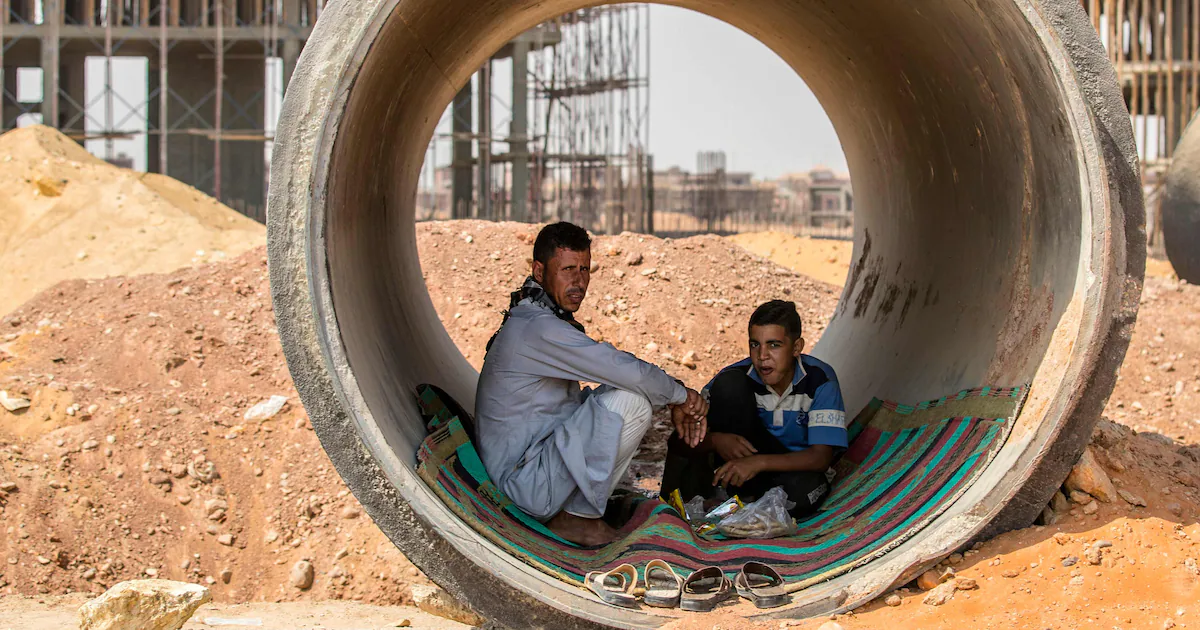
Despite strict warnings, the state’s regulatory reach is limited by the sheer size of Egypt’s informal sector. Estimates from the International Labour Organisation indicate that more than 60 per cent of jobs in the country operate outside formal contracts and social insurance systems. This structural reality means that for many workers, pay is determined by risk, skill scarcity, and competition from informal alternatives rather than government decrees.
A review of figures by the fact-checking platform Saheeh Masr revealed that Labour Ministry inspections of 26,486 private establishments between March 2025 and March 2026 identified 6,591 violations. This means that approximately one in four private firms was found to be in breach of wage regulations during that period. The difficulty in enforcement is further compounded by the fact that a private-sector minimum wage was only introduced in 2022, and even then, more than 3,000 companies and 22 sectors successfully applied for exemptions.
Worker Perspectives and Net Pay
In the private sector, wages often follow market logic rather than legal mandates. For instance, Ahmed, a 42-year-old porter at El Sewedy Electric, earns 11,000 pounds, which is about 30 per cent above the new minimum. He receives annual raises without waiting for government orders. Similarly, businessman Naguib Sawiris stated that none of his companies’ staff earn less than 10,000 pounds.
A teacher at a private school in Cairo reported earning 4,500 pounds after eight years, noting that management excludes any teacher who requests higher pay. A security guard in Heliopolis has seen his pay stagnate at 6,000 pounds since 2021. A service business owner in Heliopolis employs two Sudanese workers on verbal agreements for 6,000 pounds, citing that they accept less than Egyptian workers. Another supermarket owner in Nasr City replaced Egyptian delivery staff with Sudanese men, claiming they work harder and accept lower wages.
Some workers see signs of potential change. Yasser, a vegetable packer in New Cairo, was told his pay would rise from 6,000 to 8,500 pounds starting next month. He had previously accepted lower wages because his employer provided transport, saving him approximately 2,000 pounds monthly. Alaa El Sokky, an employers' representative on the council, clarified that the 8,500-pound figure is gross. After accounting for social insurance and tax, workers are expected to take home between 7,000 and 7,500 pounds. Calculations by The National, based on current tax brackets and an 11 per cent insurance contribution, estimate the net pay at approximately 7,200 pounds.
Economic Context and Inflation
The wage increase comes against a backdrop of high inflation and significant currency devaluation. Alaa El Sokky noted that the more than 20 per cent increase outpaced urban inflation, which slowed to 12.7 per cent in October. The Egyptian pound has depreciated sharply, trading near 54 to the dollar compared to 15.7 in March 2022. Urban inflation peaked at a record 38 per cent in September 2023.
Since the last wage adjustment in March 2025, prices nationwide have climbed by about 18 per cent according to official index figures. The government has also implemented subsidy cuts as part of its International Monetary Fund programme, including a quadrupling of subsidised bread prices in June 2024, a 45 per cent rise in electricity tariffs, and fuel price increases of 14 to 17 per cent in March. In October, transport inflation stood at 25.8 per cent and housing and utilities at 24.5 per cent.
The real value of the minimum wage has remained largely stagnant in dollar terms. The first private-sector minimum of 2,400 pounds in 2022 was worth about $154. The new 8,500-pound floor is worth approximately $158. This means workers have absorbed four years of price rises and subsidy cuts with minimal change to their purchasing power.