Image: © OilPrice.com
Egypt Launches Solar Initiative for 7,000 Factories to Cut Gas Use
Egypt’s government is installing solar systems across 7,000 factories to reduce natural gas consumption and lower production costs, supporting its national goal to source 42% of electricity from renewables by 2030.
- The Shams El-Senaa initiative targets 1,000 MW of solar capacity across approximately 7,000 factories.
- Egypt aims to increase its renewable energy share from 13% to 42% by 2030 and 65% by 2040.
- Solar power generation costs roughly $0.02/kWh, significantly less than the over $0.06/kWh for fossil fuels.
- Prime Minister Mostafa Madbouly directed that later phases of the program extend to government buildings and other facilities.
The government has launched the Shams El-Senaa program, which aims to install solar systems across approximately 7,000 factories to generate 1,000 MW of capacity. This move is designed to reduce domestic natural gas consumption, thereby freeing up reserves for export and lowering the financial burden on state budgets.
Industrial Decarbonization and Cost Reduction
Natural gas and petroleum currently account for roughly 87% of Egypt's electricity generation, with renewables making up only 13%, split between hydropower and wind and solar. The government estimates that solar power costs approximately $0.02 per kilowatt-hour, compared to more than $0.06 per kilowatt-hour for fossil fuel-based generation.
Prime Minister Mostafa Madbouly stated that the program is intended to diversify energy sources and reduce production costs for manufacturers. The initiative also seeks to support the localization of solar manufacturing, strengthening related industrial value chains and increasing local content in renewable energy components.
Strategic Energy Targets
This factory-focused rollout is a component of the broader Integrated Sustainable Energy Strategy (ISES 2035). The national strategy sets a target of sourcing 42% of electricity from renewable energy by 2030 and 60% to 65% by 2040. Egypt’s geographic position within the global solar belt provides an advantage, with the Western Desert and Upper Egypt receiving annual solar irradiance between 2,000 and 3,200 kWh/m².
Current projections indicate that Egypt’s solar photovoltaic capacity will grow from roughly 2.9 GW to 34.3 GW by 2035. This expansion is expected to drive total national renewable capacity toward nearly 49.7 GW. The government has already signed approximately 32 Power Purchase Agreements with private developers by 2025 to produce 1,465 MW of renewable energy, with additional agreements currently under negotiation.
Major Infrastructure Projects
Key projects under development include:
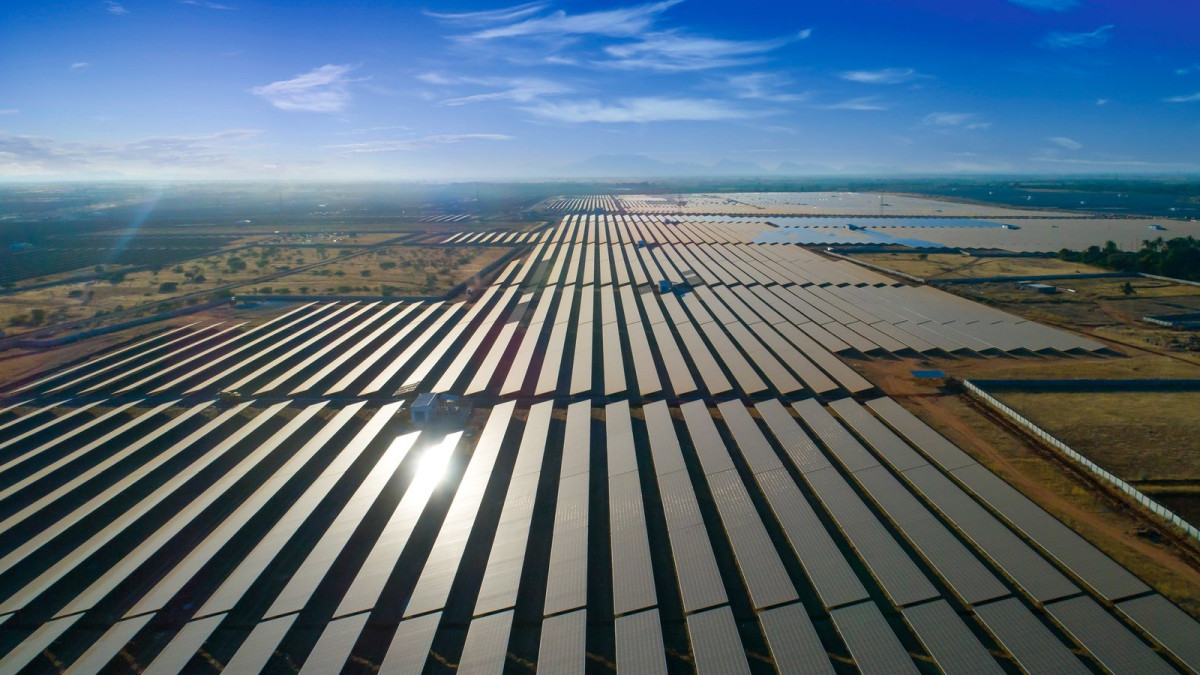
- The Obelisk Solar Power Project in southern Egypt, developed with $600 million in investment and Chinese technology, which generates around 1.1 GW and features automated cleaning robots and battery storage.
- A new solar energy plant in Upper Egypt that will be supported by batteries supplied by a manufacturing facility in the Suez Canal Economic Zone.
Expansion to Public Sector and Future Diversification
Following a review of implementation mechanisms with the Minister of Electricity and Renewable Energy, Mahmoud Esmat, the prime minister directed that subsequent phases of the solar initiative extend beyond the industrial sector. The program will now include the installation of solar systems on the rooftops of government buildings and other public facilities.
Esmat emphasized that the program is expected to reduce electricity bills for factories and curb natural gas consumption while supporting production efficiency. The government is also exploring further diversification of its energy mix. A separate nationwide project is being prepared to install solar power systems on government building rooftops, and the country is preparing to introduce nuclear energy with the El Dabaa nuclear power plant expected to contribute around 4.4 GW to the national grid once operational.
External support is also playing a role in shaping the strategy. The European Commission has contracted the management consulting firm Cowater International to assess Egypt’s energy strategy over the next two decades.