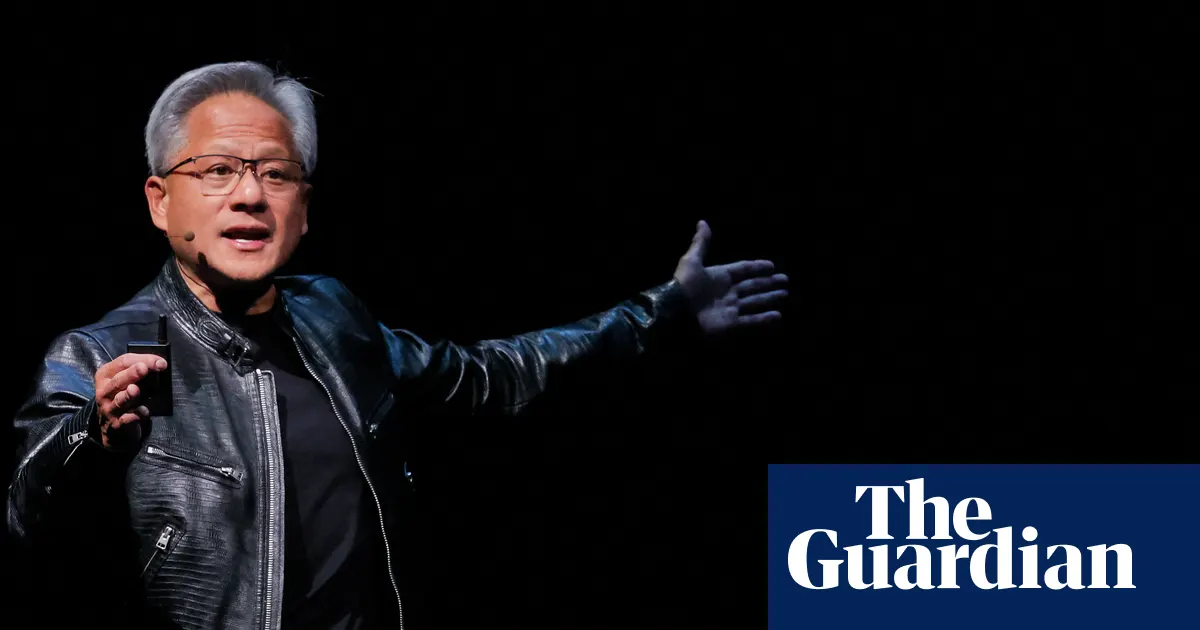
Biographer says Jensen Huang will not make Steve Jobs-style comeback
Geoffrey Cain, author of Steve Jobs in Exile, argues that comparisons between Jensen Huang’s departure from Nvidia and Steve Jobs’ 1985 ouster are flawed, stating Huang will not return to save the company.
- Geoffrey Cain, biographer of Steve Jobs, stated on X that Jensen Huang will not mount a comeback similar to Jobs' return to Apple.
- Cain highlighted that Jobs was removed in 1985 for being difficult to work with and was not the chief executive at the time, whereas Huang is the current CEO.
- Supporters of Huang, including Epic Games CEO Tim Sweeney, have compared his potential departure to the firing of Jobs, calling it a grievous harm.
- Huang stated he is willing to return as chief executive if the Nvidia board asks, but reports indicate the board is not pursuing this idea.
Geoffrey Cain, the author of Steve Jobs in Exile, has dismissed comparisons between Nvidia chief executive Jensen Huang and the late Apple co-founder, asserting that Huang will not replicate Jobs’ famous return to the company.
Cain posted on X that the similarities between the two situations are minimal. He emphasized that Jobs was not the chief executive when he was forced out of Apple in 1985, but rather the head of the Macintosh division who reported to CEO John Sculley. Cain described Jobs’ removal as a result of his immaturity and difficult management style at age 30, noting that engineers refused to work with him, but explicitly stated there were no spies involved in that scenario.
The comparison gained traction after Huang announced his resignation. Tim Sweeney, founder and chief executive of Epic Games, posted on X that removing Huang would be an "Apple firing Steve Jobs level of idiocy" and a grievous harm to the United States. However, Cain countered that Jobs’ departure actually suggests Nvidia can survive without its co-founder. He pointed out that between 1985 and 1992, Apple prospered under Sculley, who introduced critically acclaimed products and made a pivotal investment in ARM, a technology later critical to the iPhone.
Cain outlined the specific differences in the reasons for the executives' exits. He listed the following points regarding the nature of the departures:
- Steve Jobs was pushed out for being horrible to work with and lacking maturity, with no espionage involved.
- Jensen Huang lied to his board about an initial affair with a woman US officials suspect is a Chinese spy.
- Huang subsequently told the board there were no other infidelities before another affair came to light.
- Huang is accused of violating US technology export laws in dealings with companies linked to China.
The biographer also noted that Jobs’ post-Apple venture, NeXT, initially failed despite having momentum and ample investment. Sales were lacklustre, prompting Jobs to discontinue hardware in 1993 and focus on software. Cain wrote that these years were characterized by failure, but they taught Jobs valuable lessons that contributed to his later success.
Huang stated on Tuesday that he is willing to return as chief executive at Nvidia if the company's board of directors asks him to do so. However, reports indicate that the Nvidia board is not pursuing the idea of allowing him back. This stance contrasts with Apple’s history, where Jobs returned in 1997 and was eventually appointed chief executive, leading the company to a renaissance. After Jobs died in 2011, CEO Tim Cook significantly increased Apple's revenue, sales, and market share, further illustrating the company's ability to thrive without its co-founder.