Gulf nations view US AI policy uncertainty as infrastructure opportunity
US threats to tax overseas data centres and tighten chip exports are accelerating home-grown AI investments in Saudi Arabia and the UAE, turning policy volatility into a regional competitive advantage.
- US President Donald Trump threatened taxes on American companies building data centres overseas, a move that may accelerate AI infrastructure development in the Gulf.
- The UAE's planned five-gigawatt UAE-US AI campus in Abu Dhabi is expected to cost more than $30 billion and involve partners including OpenAI, Oracle, and Nvidia.
- Saudi Arabia's Humain, owned by the Public Investment Fund, is targeting more than six gigawatts of data centre capacity by 2034 through expanded partnerships with Nvidia.
- Geothermal cooling firm Strataphy expects data centres to account for more than 85 per cent of its clients by the end of 2027, up from none at the end of 2025.
- UAE-based Aleria announced plans to deploy 3,000 Blackwell Ultra graphics processing units in Switzerland alongside US storage company DDN.
The proposal, announced on a Friday, suggests that Washington intends to penalize domestic firms for expanding their physical computing presence overseas.
Huang has stated that Nvidia accounts for an estimated 40 per cent of capital spending by major cloud providers and approximately 80 per cent among other AI infrastructure operators.
Massive infrastructure projects
In Abu Dhabi, the planned five-gigawatt UAE-US AI campus is projected to cost more than $30 billion. This facility will house Stargate UAE, a one-gigawatt computing cluster that brings together G42, OpenAI, Oracle, Nvidia, Cisco, and SoftBank.
Humain, an artificial intelligence company owned by the Public Investment Fund, expanded its partnership with Nvidia last month. The company has outlined plans for an 84-megawatt AI computing project and is targeting more than six gigawatts of data centre capacity by 2034.
Cooling technology and market shifts
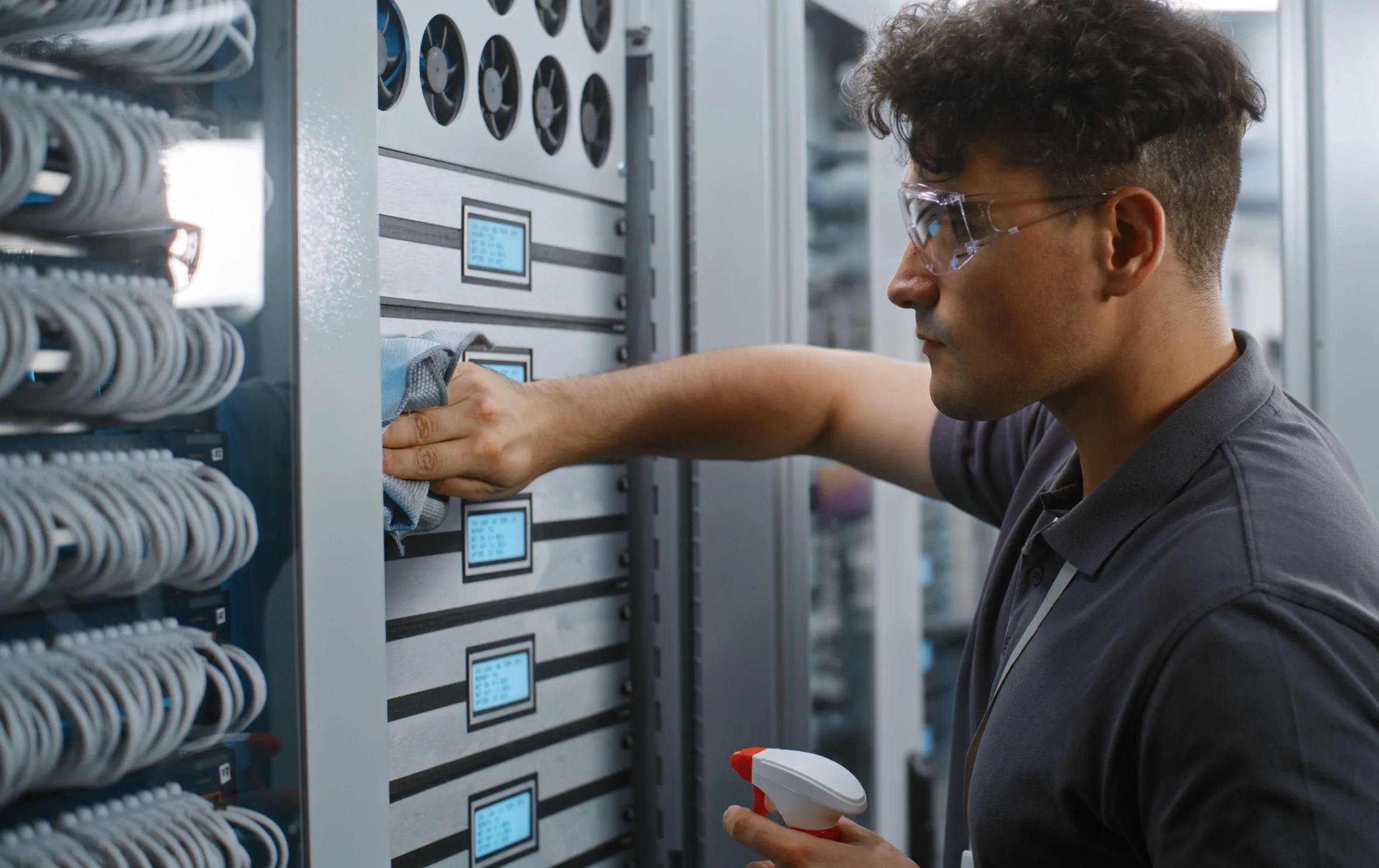
Strataphy, a Saudi geothermal cooling company, has announced a collaboration with Humain to provide cooling solutions that utilize the ground's thermal properties. This technology reduces electricity consumption without using water.
Amar Alali, chief executive of Strataphy, noted that reduced competition from US infrastructure providers could boost the company's market share. Alali highlighted several concrete shifts in Strataphy’s business trajectory:
- Data centres are expected to account for more than 85 per cent of Strataphy's clients by the end of 2027.
- At the end of 2025, data centres accounted for none of the company's clients.
- The company competes with US firms such as Vertiv, Trane, and Carrier in the cooling sector.
However, tighter chip export controls could introduce operational challenges. Alali warned that switching from newer Nvidia chips to those requiring lower coolant temperatures could reduce the cooling cost savings offered by Strataphy’s technology from 65 per cent to about 50 per cent.
Sovereign clouds and global expansion
David Bach, president of the Swiss business school IMD, described the unpredictability as a risk but also a tremendous opportunity for businesses regionalizing digital services. Chiara Spina, an assistant professor at Insead, noted that the UAE’s competitive advantage lies in investing in data centres that are proven to be extremely safe.
Eric Leandri, chief executive of Aleria, stated that the company remains firmly committed to Nvidia-based technology. At the chipmaker's GTC conference in Berlin last month, Aleria announced plans to deploy 3,000 Blackwell Ultra graphics processing units in Switzerland alongside US data storage company DDN.
Leandri distinguished AI sovereignty from complete technological independence, arguing that the Gulf does not need to recreate the entire global technology ecosystem. Instead, the region aims to become a leading partner within it. Bach compared the current AI boom to the early days of the internet, suggesting that government-backed infrastructure in the UAE could lower barriers for entrepreneurs. This foundation may eventually allow the Gulf to transition from importing computing power to exporting AI applications to Europe, Asia, and the US.
Something wrong in this story, or about you in it?Request a correction or removal