SandboxAQ founder predicts AI shift from language models to quantitative data
Jack Hidary argues the recent market correction is healthy and that artificial intelligence's next phase will rely on numerical data in sectors like finance and energy rather than large language models.
- SandboxAQ founder Jack Hidary described the recent sell-off in technology stocks as a healthy correction driven by market sentiment and rising interest rates rather than fundamental economic changes.
- Hidary predicts that 2027 will be the year of convergence for AI, shifting focus from general language models to large quantitative models trained on specific scientific and financial data.
- Hidary argues that data centres are fundamentally a real estate play and that the true investment opportunity lies in industrial and pharmaceutical companies adopting AI faster than peers.
SandboxAQ founder Jack Hidary has characterized the recent volatility in global equity markets as a necessary reassessment rather than a crisis, predicting that the artificial intelligence sector will pivot toward numerical and scientific applications in the coming years.
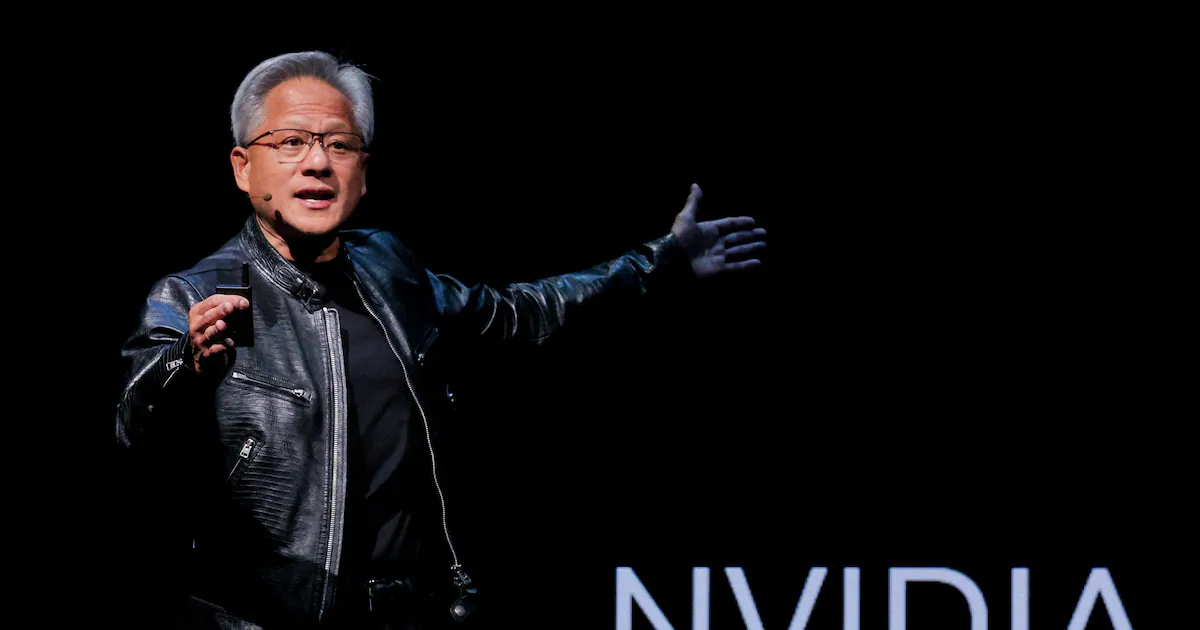
With Huang returning to the helm, the immediate question of leadership stability has been resolved, though Hidary suggested that smaller cloud infrastructure providers may still face tightening conditions.
Market Sentiment and Central Banks
Hidary attributed the market nervousness to a combination of year-end positioning, broader equity sell-offs, and the appeal of higher yields offered by central banks. He noted that when Federal Reserve officials and their global counterparts offer attractive rates, capital naturally moves away from equities and toward fixed-income instruments. He emphasized that there was no fundamental shift in the economy that would justify the severity of the drop, pointing instead to transient sentiment.
Enterprises remain committed to their AI strategies despite the market turbulence.
The Shift to Quantitative Models
Looking ahead, Hidary identified 2027 as the year of convergence for the industry. He argued that the initial phase of large language models, which process text and internet data, has largely served its purpose as companies check boxes for boardroom compliance. The next wave, he said, will be defined by large quantitative models trained on verticalized, domain-specific datasets in fields such as energy, biology, and quantitative finance.
These models are designed to solve complex physical and scientific problems rather than generate content. Hidary illustrated this by noting that a model trained on internet images and social media posts is insufficient for designing new battery technologies. He drew a parallel to the human brain, where language represents only a small fraction of cognitive function, while the majority is dedicated to processing real-world data and physical interactions.
Energy and Industrial Applications
Hidary contends that the most significant opportunities in AI lie outside of software and within the real economy, which he estimates accounts for 80 percent of global GDP. He singled out sectors such as energy, commodities, agriculture, and industry as the primary beneficiaries of advanced AI applications. He highlighted the critical role of energy storage, noting that less than 2 percent of electricity on the US grid can currently be stored, creating vulnerabilities that AI-driven solutions could help address.
As an example of this convergence, he pointed to a project at Egypt’s Benban Solar Park, which has secured $127 million from the European Bank for Reconstruction and Development and Germany’s DEG to install battery storage systems. He argued that achieving AI sovereignty requires first establishing energy sovereignty, linking the two sectors directly.
Investment Opportunities Beyond Data Centres
While billions are being invested in AI infrastructure, Hidary described the focus on data centres as a red herring. He characterized data centres essentially as warehouses with electricity, framing them as a real estate play rather than a pure AI investment. He suggested that investors should look toward companies in pharmaceuticals, aerospace, and industry that are integrating AI capabilities faster than their competitors.
He specifically named Eli Lilly and Roche as examples of firms embracing these technologies. In the financial sector, he predicted that quantitative AI would have the deepest impact, moving risk management beyond traditional Monte Carlo simulations. This shift would be driven by the need for more sophisticated handling of numbers and equations, which he believes are the true drivers of banking and hedge fund performance.
The talent required to build these advanced models is already being cultivated in the region, according to Hidary. He noted that the Mohamed bin Zayed University of Artificial Intelligence has expanded from 200 students to 900 in three years, welcoming its first undergraduate cohort last year. He viewed this growth as a positive indicator for the health of the AI sector over the next three to five years.
Key elements of Hidary’s outlook include:
- The prediction that 2027 will mark the convergence of AI with domain-specific scientific and financial data.
- The assessment that data centres represent a real estate opportunity rather than a core AI investment.
- The identification of Eli Lilly and Roche as companies advancing in AI adoption.
- The observation that rising interest rates are naturally drawing capital away from equities.
Something wrong in this story, or about you in it?Request a correction or removal