Image: © investingLive
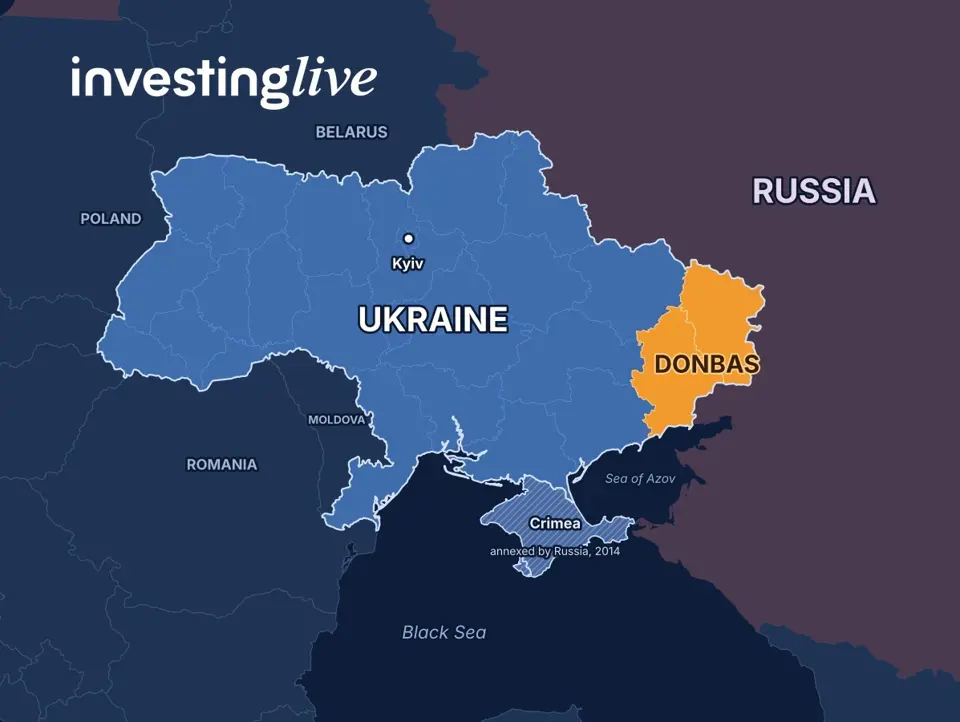
US envoys propose NATO membership for Ukraine in exchange for Donbas territory
Reports indicate US diplomats have discussed trading Ukrainian territory for NATO membership, a proposal that faces immediate rejection from Kyiv and conflicting positions among European allies.
- US envoys Jared Kushner and Steve Witkoff have raised the idea of NATO membership for Ukraine in exchange for ceding Donbas territory during recent meetings.
- Russian negotiators have presented non-paper demands requiring Ukraine to remove NATO aspirations from its constitution and roll back Eastern European infrastructure to 1997 levels.
- French President Emmanuel Macron supports discussing membership, but NATO expansion requires consensus, creating diplomatic hurdles for any potential deal.
According to reports from The Wall Street Journal, US envoys Jared Kushner and Steve Witkoff have presented these ideas in conversations with European officials and Ukrainian leadership.
Two specific scenarios have been outlined in the reports. The first scenario involves Ukraine ceding the portion of the Donbas region it currently controls in exchange for full NATO membership. The second scenario proposes freezing the conflict along the existing front line, allowing Ukraine to retain some Donbas territory while receiving security guarantees through a treaty with the United States and potentially European allies. A US official noted that many ideas are under discussion and that agreement from both Ukraine and Russia would be necessary for any final deal.
Conflicting Positions and Maximalist Demands
In a non-paper reviewed by the Journal, Russian negotiators required Ukraine to remove NATO aspirations from its constitution. The Russian demands also included a commitment from the alliance not to station troops or equipment in Ukraine and an end to Western arms deliveries.
Additionally, Russia called for a rollback of NATO military infrastructure in Eastern Europe to levels existing in 1997. European negotiators described these demands as maximalist opening bids.
Divisions Within European Leadership
European leaders hold divergent views on the issue of Ukrainian NATO membership, complicating the path to a consensus. French President Emmanuel Macron stated after talks in Berlin that it is time to discuss Ukraine’s membership. This position contrasts with that of German officials, who are unwilling to pursue membership at this time.
Chancellor Friedrich Merz has told aides he does not expect Ukraine to join the alliance in his lifetime. Since NATO expansion requires consensus among all member states, these internal divisions present a structural hurdle to any agreement.
Market Implications and Future Outlook
The reports highlight active diplomacy but indicate no convergence among the parties. Markets are unlikely to price a settlement soon given the distance between the positions. European defence stocks are identified as the most headline-sensitive assets, with any sign of a breakthrough potentially testing their recent rally.
A credible peace path would eventually weigh on European gas prices and diesel cracks, where Russian refining and product exports have been a supply risk. Such a development could also support the euro. For oil markets, the Middle East remains the bigger driver, making Ukraine headlines a secondary factor for crude prices.
Key elements of the diplomatic landscape include:
- The same topic was discussed in at least one meeting in the United Arab Emirates involving Ukrainian, European, and Russian negotiators.
- Zelensky confirmed the Americans asked, “What if Ukraine joins NATO? Would Ukraine withdraw from Donbas?” but reiterated that Ukraine will not give up its land.
- Any deal requires approval from the Ukrainian people, according to Zelensky, and consensus among all NATO members.