Binance reveals $6.3 billion hack details as Thai police highlight recovery hurdles
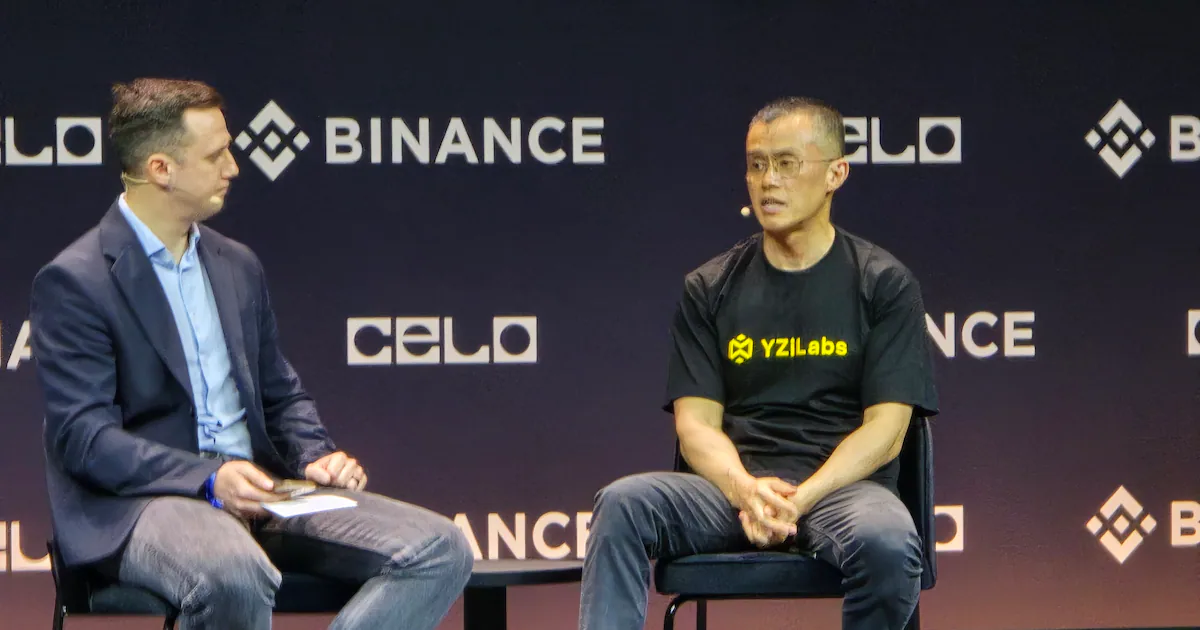
Binance executives and investigators detailed the $6.3 billion October 29 cyberattack at a Bangkok panel, noting $2.85 billion was frozen while Thai police cited legal barriers to fund recovery.
- Binance replaced all affected customer token assets by November 13 using its own resources and fully lifted withdrawal restrictions linked to the incident on Friday.
- Binance replaced all affected customer token assets by November 13 using its own resources and lifted withdrawal restrictions on Friday.
The discussion revealed how security teams, blockchain intelligence firms, and stablecoin issuers mobilized simultaneously to contain the breach that began on October 29.
The frantic first hour of the attack
Funds began leaving Binance wallets shortly after, and within about 20 minutes, the attackers had moved most of the stolen assets across different blockchains.
Antonio Alvarez Lorenzo, Binance's deputy chief compliance officer, described the response as a coordinated effort where every minute counted. He noted that teams were running in different directions to address various areas of the attack in parallel rather than sequentially.
Jonno Newman, head of deployment strategy for Asia-Pacific at TRM Labs, described the initial atmosphere as frantic. He recalled the disbelief among industry participants before exchanges, intelligence firms, and stablecoin issuers rallied together to track the movement of funds.
Tom McLouth, a senior intelligence analyst at Chainalysis, highlighted the critical role of human decision-making in automated monitoring systems. His team received an alert within the first hour, but the activity could have been mistaken for Binance transferring assets between its own wallets. The team made the decision in that first hour to identify the movement as suspected stolen funds.
Freezing billions amid legal barriers
Stablecoin issuers Tether and Circle began freezing stolen assets within an hour of the breach. Within hours, these issuers and blockchain networks helped freeze approximately $2.7 billion. The total frozen amount later reached roughly $2.85 billion, which accounts for about 45 per cent of the $6.34 billion stolen.
Despite the freezing of these assets, there is no comprehensive publicly confirmed figure for funds returned to Binance.
Lt Col Thanatus Kangruambutr of the Royal Thai Police explained the difficulties in turning traced funds into cross-border cases. He emphasized that wallet addresses are merely numbers and the primary challenge is identifying the people behind them. He noted that legal procedures are slow, stating, "When we just finish writing the paperwork, the money is gone."
Industry cooperation and future threats
The panelists argued that industry cooperation must become a permanent feature of the financial system rather than an emergency response. Tom McLouth highlighted the importance of building relationships before incidents occur, while Lt Col Thanatus called for simpler procedures and faster mechanisms for returning money to victims.
Jonno Newman compared cybersecurity to protecting 100 potential entry points, noting that attackers only need to find one. He stated that artificial intelligence lowers technical barriers for criminals while forcing security teams to defend increasingly complex systems. He warned that stolen assets could continue moving through decentralized services and blockchain bridges for months or years.
Binance founder Changpeng Zhao acknowledged security complacency within the company and the broader ecosystem. He warned that the industry could face another six to 12 months of heightened cyber threats and called for an international security alliance. He suggested that the Binance breach should serve as an alarm for the industry.
Key figures and entities involved
The following details summarize the core data and participants discussed during the panel:
- Binance replaced all affected customer token assets by November 13 using its own resources and lifted withdrawal restrictions on Friday.
Something wrong in this story, or about you in it?Request a correction or removal